Define material cyber risk
Every item has a business service, accountable owner, risk tier, crown-jewel flag, exposure signal, and target closure date.
Turn material cyber risk into accountable executive action.
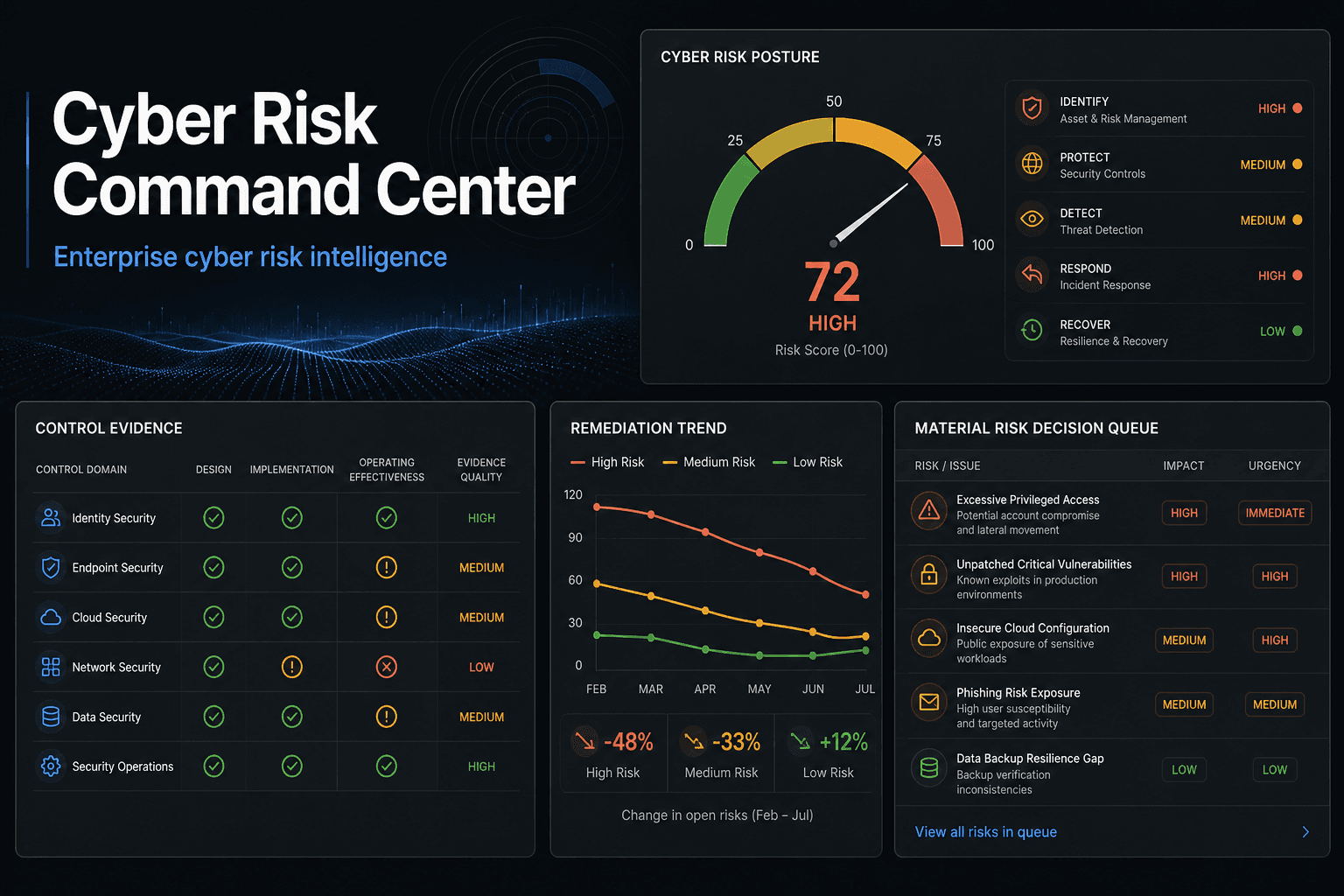
Executives need to understand which exposures are material, which controls are evidenced, which remediation commitments are overdue, and which exceptions require acceptance. Traditional dashboards can show telemetry without revealing the operating decision: escalate, fund, accept, or close.
Every item has a business service, accountable owner, risk tier, crown-jewel flag, exposure signal, and target closure date.
Confidence combines exposure, control effectiveness, remediation velocity, identity, third-party risk, and resilience.
Internet-exposed crown-jewel findings, overdue critical vulnerabilities, missing owners, privileged-access gaps, and untested recovery proof cannot hide behind a healthy average.
The command center converts active rules, exceptions, and drivers into a deterministic cyber brief and a decision queue.
Illustrative enterprise evidence model: vulnerability management · SIEM/SOC coverage · IAM/PAM evidence · supplier assurance · GRC exceptions · Jira/ServiceNow remediation workflow · resilience testing. The public demo uses synthetic data, no API keys, and no employer connections.
The application demonstrates how a senior technology program leader can connect security, engineering, operations, risk, and executive sponsors around the same evidence model: what is material, who owns it, why it is escalated, and what action changes the risk posture.