Register and risk-tier use cases
Every AI use case has an accountable owner, business purpose, data classification, criticality, model approach, and lifecycle stage.
Move AI from experimentation to accountable production.
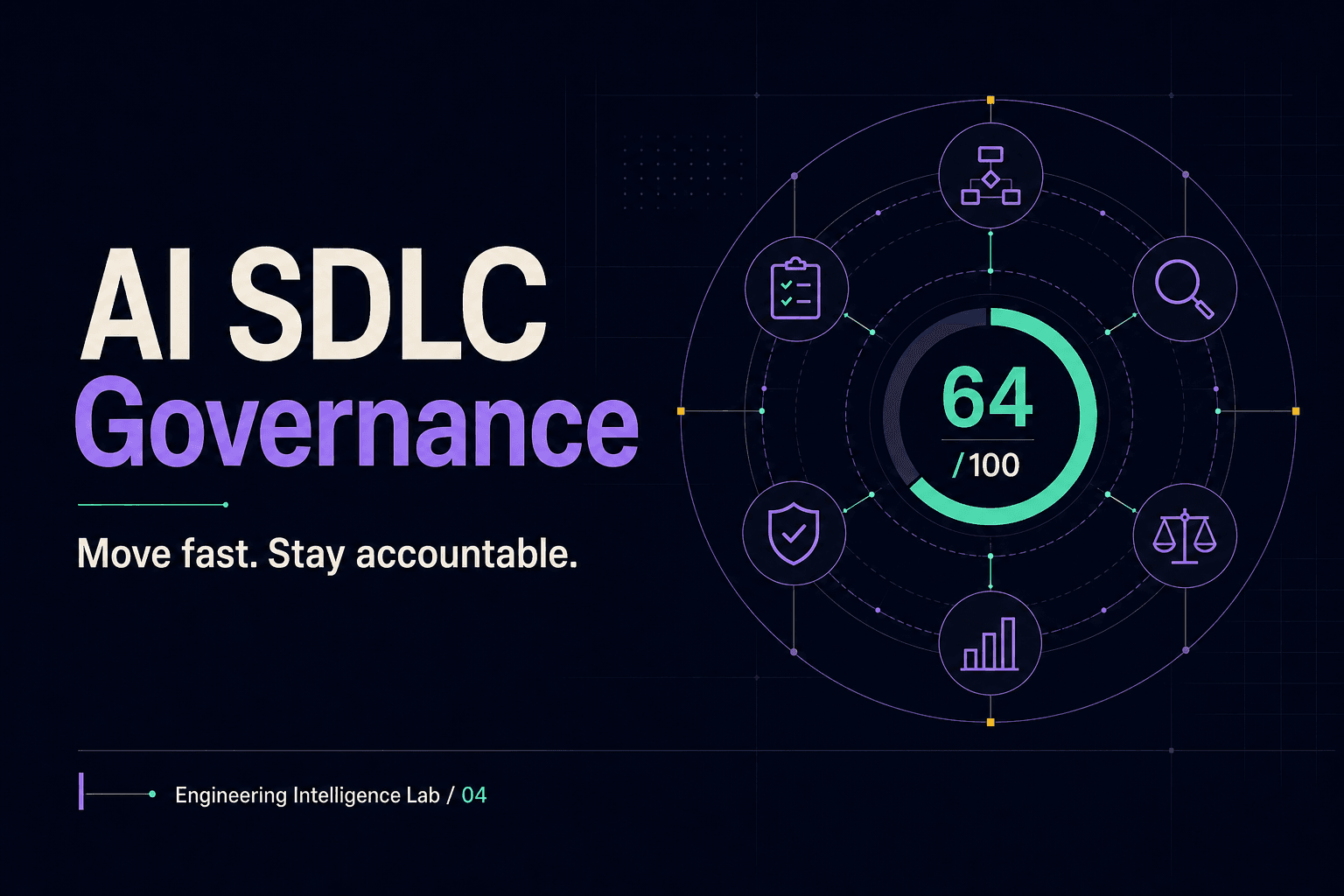
Leaders can have dozens of AI experiments moving through discovery, development, evaluation, and production without a shared view of ownership, risk tier, control evidence, exceptions, or readiness. The challenge is not adding another approval board. It is building governance into the delivery system so teams can move quickly while leaders retain accountable control.
Every AI use case has an accountable owner, business purpose, data classification, criticality, model approach, and lifecycle stage.
Required evidence is visible from intake through production across privacy, safety, security, SDLC controls, and operations.
Six weighted dimensions, status thresholds, and non-negotiable caps show exactly why a use case is ready, conditional, under review, or stopped.
Exceptions, blockers, top drivers, recommended actions, and a no-key executive brief turn governance evidence into accountable action.
Illustrative enterprise evidence model: Jira and Confluence · CI/CD pipelines · model evaluation and red-team evidence · security and privacy reviews · observability and incident controls · executive decision records. The public demo uses synthetic data, no API keys, and no employer connections.
The application demonstrates how a senior or principal TPM can scale responsible AI adoption across product, engineering, risk, security, privacy, and operations: establish a common control model, preserve speed through explainability, surface exceptions early, and make production decisions defensible.